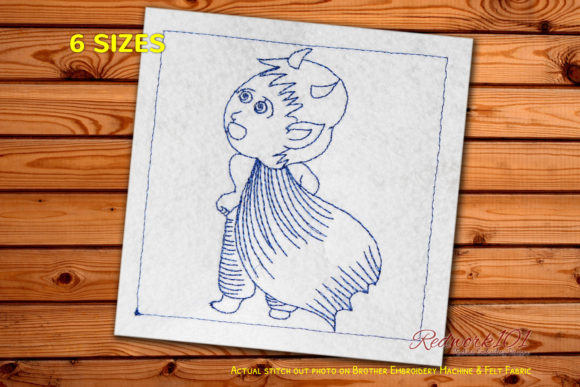
Devil with Cape Bluework
When I first opened the Devil with Cape Bluework machine embroidery design, I admit I was curious how a Halloween-themed motif would fit into a personalized gift shop that mostly handles baby blankets, wedding keepsakes, and kitchen towels. After stitching several test runs and imagining real customer scenarios, I can say this design has surprising versatility. The bluework style gives it a hand-drawn, vintage feel that softens the devilish theme, making it charming rather than spooky. For the experienced embroiderer or the small shop owner looking to expand their seasonal offerings, this design offers both personality and practicality.
First Impressions: Mood, Detail, and Emotional Appeal
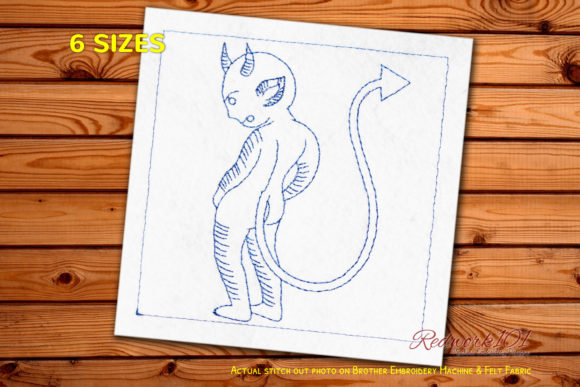
The Devil with Cape Bluework design reads as playful and mischievous, not menacing. The bluework technique uses a single-color, sketch-like line treatment that feels reminiscent of classic embroidery traditions. The devil character is depicted with a cape, a sly grin, and a tail, all rendered in clean, open lines. The emotional appeal leans toward whimsical and nostalgic, perfect for customers who want a gift with a sense of humor or a touch of folklore. The detail level is moderate—there are enough lines to give the character personality, but the design is not overly dense. This makes it suitable for a range of fabrics and product types without overwhelming the surface.
Because the design is executed in a single thread color (typically a deep blue or navy), it coordinates easily with different fabric bases. The lack of multiple thread colors simplifies the embroidery process and reduces thread changes, which is a time-saver for production stitching. The mood is lighthearted and seasonal, ideal for Halloween-themed gifts, but the bluework style also gives it an artisan quality that can appeal to customers who appreciate handmade, vintage-inspired decor.
Best Uses for Personalized Gifts
When I tested the Devil with Cape Bluework on various product blanks, I was pleased to find it adapts well to both soft and firm surfaces. Here are the applications I recommend for a personalized gift shop:
- Baby embroidery: While a devil motif might seem unconventional for a nursery, the bluework style makes it cute and storybook-like. Consider it for a Halloween-born baby's blanket or a onesie with a humorous "little devil" sentiment. The open lines stitch cleanly on cotton interlock and flannel.
- Wedding gifts: For couples who celebrate an October wedding or who have a playful relationship, this design on a set of kitchen towels or a pillow cover becomes a memorable keepsake. The single-color stitching looks elegant on linen or high-quality cotton.
- Personalized towels and aprons: The devil character works well on terry cloth and kitchen linens when you use a medium-weight stabilizer. The design is small enough to fit on a hand towel or the pocket of an apron without overwhelming the product.
- Nursery decor and pillow covers: A throw pillow with the Devil with Cape Bluework adds a touch of seasonal humor to a playroom or nursery. The stitch density is low enough that the fabric remains soft, which is important for items that children will handle.
- Tote bags and custom orders: This design is a strong candidate for Etsy listings and craft fair products. It photographs well because the single-color linework is crisp and easy to see. Personalized with a name or date, it becomes a unique gift item for Halloween enthusiasts.
- Blanket embroidery: On a fleece or cotton blanket, the design adds a focal point without adding weight or stiffness. The bluework style lies flat and does not pucker when properly stabilized.
For the digital product seller, the Devil with Cape Bluework is a strong addition to a Halloween collection. It can be bundled with other bluework designs or offered as a standalone file. The optional Box Stitch mentioned in the product description gives you flexibility: you can choose to frame the design with a stitched border or omit it for a more open, airy look. I recommend testing both versions to see which resonates with your customer base.
Where to Use This Design with Care
No design is perfect for every surface, and the Devil with Cape Bluework has a few considerations that I want to share from my own testing:
- Small lettering and delicate details: The character's tail and cape have fine lines that can be lost on very textured fabrics. If you are adding a name or short text beneath the design, make sure the lettering is at least 0.25 inches tall to remain legible. Test on a scrap piece of the same fabric before committing to a customer order.
- Thick towels and terry cloth: Towels with high loops can swallow the thread and make the lines appear broken. Use a tear-away or water-soluble stabilizer on top to keep the stitches visible. A medium-density design works fine, but I suggest reducing the stitch density slightly if your machine allows it.
- Stretchy baby clothes and knit fabrics: The design has enough open space that it does not distort easily, but you must use a cut-away stabilizer for knits to prevent flagging. Hoop the fabric snugly without stretching it, and test a sample first.
- Curved surfaces like baby bibs or cap sleeves: The devil design is compact enough to fit on a bib front or a small sleeve, but avoid placing it too close to seams or curved edges. The Box Stitch option can actually help anchor the design on a curved surface by providing a stable border.
- Dark fabric: Because the bluework style uses a single light-to-medium thread color, it will not show well on very dark fabrics. If you want to offer this design on black or navy items, consider using a white or bright thread. Always make a mockup before taking orders.
- Products that need frequent washing: The good news is that the low stitch density means fewer thread breaks and less shrinkage stress. Use a quality polyester thread and a medium-weight stabilizer, and the design will hold up to repeated washing on towels, blankets, and baby items.
How This Design Affects Giftability and Perceived Value
From a business perspective, the Devil with Cape Bluework brings a distinct advantage: it stands out in a crowded market. Many Halloween embroidery designs rely on multiple colors and dense fills, which can look busy on small items. This design, with its open bluework style, looks intentional and artistic. When a customer sees a gift with a hand-stitched, single-color motif, they perceive it as higher quality and more thoughtful. The optional Box Stitch adds a framing element that makes the design feel complete, like a tiny piece of art.
For Etsy sellers and small shop owners, this design improves buyer engagement in several ways:
- Photography: The clean lines photograph well without glare or shadow issues. You can stage the product with a simple background and the design will be the hero of the image.
- Customization: Because the design is single-color, it is easy to match thread colors to a customer's preferred palette. Offer a choice of blue, black, red, or white thread to increase customization options.
- Emotional connection: Funny or whimsical designs often create a stronger emotional response than generic motifs. A customer buying a "devil" themed gift for a friend or new parent is likely sharing an inside joke, which builds brand loyalty and repeat orders.
- Perceived value: The bluework technique looks more labor-intensive than it is. Customers associate single-color linework with traditional hand embroidery, allowing you to price the finished product at a premium.
I recommend creating a few mockup samples using printable mockup tools to show customers how the design looks on different products. A pillow cover with the Devil with Cape Bluework in a deep navy thread on natural linen is a strong seller. A baby onesie with the same design in a soft grey thread is another option that appeals to modern parents.
Practical Embroidery Notes for Testing and Production
Before you offer this design to customers, I urge you to go through a thorough testing process. Here are the steps I follow when I evaluate a new file for my shop:
- Test on scrap fabric: Use the exact fabric type you plan to sell. Stitch the design once with the Box Stitch and once without. Compare the two versions to decide which you prefer for your product line.
- Check thread color contrast: The product description notes that the outer Box color is different in most designs unless it is part of the design itself. This means you can skip the box color directly in your software if you want a pure bluework look. Test both options on your target fabric.
- Confirm hoop size: The design is compact, but always check the dimensions in your embroidery software. Make sure it fits within your hoop with room for the fabric to be properly tensioned.
- Review stitch density: The density is moderate, but you may want to adjust it slightly for very thick or very thin fabrics. A lower density works better on towels, while a slightly higher density gives a more solid line on cotton.
- Use proper stabilizer: For towels, use a medium-weight tear-away with a topper. For knits, use a cut-away. For wovens, a tear-away is usually sufficient. Always test the stabilizer with the actual fabric.
- Compare light and dark fabric mockups: Stitch the design on a light fabric and a medium fabric. The bluework style is most effective on light to medium backgrounds. If you plan to offer it on dark fabric, switch to a light thread color.
- Check small details after stitching: Examine the tail, the face, and the cape lines. If any details are lost, adjust the thread tension or reduce the design size slightly. The devil's expression is important to the charm, so make sure the face remains crisp.
- Confirm commercial licensing: Before you sell any finished product, verify the licensing terms of the Devil with Cape Bluework embroidery file. Some digital embroidery files require a commercial license for products sold in quantity. Respect the creator's terms.
Final Thoughts for Shop Owners and Sellers
The Devil with Cape Bluework is a design that rewards careful testing. It is not a dense, all-over fill that hides mistakes. Its open, sketch-like nature means every stitch is visible, and the quality of your digitizing and stitching will be on full display. That is a good thing for experienced embroiderers who take pride in clean work. For those newer to machine embroidery, I suggest starting with medium-weight cotton fabric and a good quality thread before moving to more challenging blanks like towels or knits.
This design fits well in a Halloween collection, but do not limit it to October. The bluework style and the playful character have a timeless quality that works for birthday gifts, housewarming presents, and even wedding favors for couples with a sense of humor. The optional Box Stitch gives you flexibility to dress the design up or down, and the single-color thread palette keeps production simple and efficient.
If you are an Etsy seller looking for a design that stands out in search results, the Devil with Cape Bluework offers a unique visual that is different from the typical multi-color Halloween motifs. It photographs beautifully, customizes easily, and creates a strong emotional connection with buyers who appreciate handmade quality with a wink. Test it, trust your stabilizer, and you will have a product that feels both personal and professional.
Happy stitching, and may your threads stay true.