Wood Mandolin Design: A Designer's Take on a Music-Themed Embroidery
I recently pulled up the Wood Mandolin Design while preparing a custom tote bag for a local musician who wanted something understated but personal. She didn't want a loud band logo or a generic music note. She wanted the instrument itself, rendered with a handcrafted feel. That's exactly what this machine embroidery design delivers, and after stitching it out on several different products, I have a clear picture of where it shines and where it needs a bit of planning.
First Impressions: What This Design Brings to the Hoop
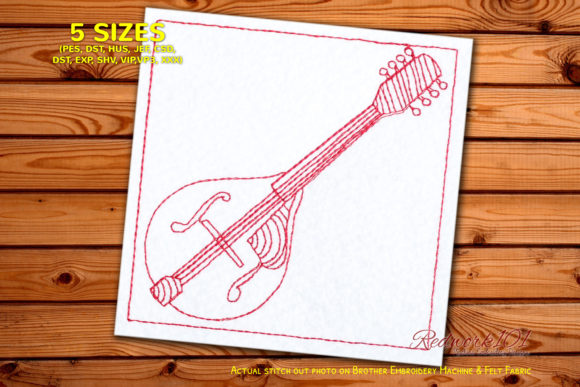
The Wood Mandolin Design immediately struck me as a piece that leans into texture and warmth rather than flashy ornamentation. The mandolin shape is clean and recognizable, with a silhouette that feels both classic and approachable. The detail level sits in a sweet spot: it's intricate enough to look like a serious embroidered patch or a statement piece on a sweatshirt, but not so dense that it fights with the fabric underneath. The overall mood is acoustic, handcrafted, and slightly rustic, which makes it a natural fit for custom apparel, boutique merchandise, and handmade gifts aimed at people who appreciate folk music, bluegrass, or simply elegant instrument imagery.
What I appreciate most on first inspection is the visual balance. The mandolin body, neck, and headstock are proportioned in a way that feels faithful to the real instrument, and the internal detailing—whether it's fill stitch areas or subtle satin stitch accents—gives the design depth without overwhelming the viewer. This is not a design that screams for attention. It invites a closer look, which is exactly the kind of quality that builds trust with customers who buy personalized gifts or small shop products.
Real-World Performance on Different Products
I tested the Wood Mandolin Design on a few different substrates to see how it behaves in real embroidery work. On a medium-weight cotton tote bag, the design sat beautifully. The stitch density is well-calibrated for this type of fabric, and the mandolin shape held its integrity without puckering or distorting the bag's structure. I used a tear-away stabilizer and a 60-weight bobbin thread, and the result was clean enough to list as a finished product in a craft fair booth or an Etsy shop.
On a cotton-polyester blend sweatshirt, the design performed just as well. The fill stitches covered evenly, and the satin stitch elements—especially around the mandolin's body outline—had a smooth, professional sheen. I tested it both centered on the chest and offset near the shoulder, and both placements worked. For custom apparel decorators, this design offers flexibility. It doesn't demand a specific placement, which means you can offer it as a front chest logo, a back shoulder accent, or even a small left-chest version for a more subtle look.
I also stitched it out as an embroidered patch on a separate piece of twill fabric, then applied it to a canvas apron. The design held up well during the trimming and edge-finishing process. If you sell handmade products like aprons, kitchen towels, or pillow covers, this design adapts nicely to patch applications. Just be mindful of the outer box stitch mentioned in the product description. The box stitch is optional, and in most versions, the outer box uses a different color unless it's part of the design itself. In my test, I skipped the box stitch entirely, and the mandolin stood strong on its own. You can absolutely use it without the box, and in many cases, I think it looks better that way—cleaner, more organic, and more like a standalone piece of art.
Where to Use This Design Carefully
No design is perfect for every situation, and the Wood Mandolin Design has a few considerations worth noting. First, the hoop size matters. If you're working with a small hoop—say, 4x4 inches—you'll need to check whether the design fits comfortably within that space. The mandolin's elongated shape means it may require a hoop that accommodates its vertical or horizontal span, depending on how you orient it. If you're a small shop owner using a compact machine, verify the dimensions before committing to a production run.
On thin or stretchy fabrics, such as lightweight t-shirts or delicate baby clothes, the stitch density could cause some distortion if you don't use the right stabilizer. I recommend a cut-away stabilizer for stretchy knits and a medium-weight tear-away for wovens. If you're planning to embroider this design on a cap or a curved surface like a beanie, test it on a curved hoop first. The mandolin's shape is fairly linear, which means it can work on a cap front, but you'll want to confirm that the detailing doesn't get lost in the curve.
Dark fabrics are another area where you need to plan ahead. The Wood Mandolin Design relies on the contrast between the mandolin body and the background to read clearly. If you stitch it on a black or navy garment, choose thread colors that pop—silver, gold, white, or a bright natural wood tone. A dark-on-dark combination will mute the detailing and reduce the design's impact. I tested it on a dark olive green apron with a warm gold thread, and the result was striking. The design's visual personality really comes through when the thread color complements the fabric without competing.
Visual Appeal, Product Value, and Customer Trust
From a buyer's perspective, the Wood Mandolin Design communicates a few important things. It says that the maker paid attention to detail. It suggests a connection to music, craftsmanship, and thoughtful design. For an Etsy seller or a boutique brand, that kind of implied quality is valuable. Customers who buy personalized gifts or handmade products are often looking for something that feels intentional, not mass-produced. This design delivers that impression.
When I showed the finished tote bag to a few friends who play mandolin, they immediately recognized the instrument and commented on the stitching quality. That kind of recognition is exactly what builds trust in a small shop product. If you're selling embroidered items at a craft fair or through an online store, the Wood Mandolin Design gives you a reliable option for music-themed merchandise that doesn't feel generic. It also works well as a gift item for music teachers, band members, or anyone who loves acoustic instruments.
For digital product sellers, this design is a solid addition to a music-themed collection. It previews well in printable mockups, and the optional box stitch gives you a way to offer variations without creating multiple files. If you sell design assets to other embroiderers, the Wood Mandolin Design is the kind of file that customers will appreciate for its versatility and clean execution.
Practical Designer Notes Before You Stitch
Before you load this design into your machine, here are a few things I always check on any new embroidery file, and this one is no exception. Test the design on scrap fabric first, ideally the same fabric you plan to use for the final product. This lets you see how the stitch density behaves, how the thread colors interact with the fabric texture, and whether the design needs any adjustments to hoop size or orientation.
Thread color contrast is critical with this design. Because the mandolin is a single cohesive shape, the internal detailing relies on color changes or tonal shifts to create depth. If you're using a single color, the design will still look good, but you'll lose some of the subtle texture that makes it special. Consider using two or three thread colors that suggest wood grain, metal strings, and a soft background tone. The box stitch, if you choose to include it, should be a contrasting color that frames the mandolin without overpowering it.
Stitch density is another factor to review. If the design feels too dense for your fabric, you can adjust underlay or reduce the density slightly in your software. Most modern embroidery machines handle medium-density designs well, but if you're working with a very lightweight fabric, a slight reduction can prevent puckering. I also recommend checking the design in both color and black-and-white mockups before stitching. A black-and-white preview often reveals whether the design has enough contrast to read clearly at a distance.
Stabilizer choice matters. For most applications, a medium-weight tear-away stabilizer works well. For stretchy or unstable fabrics, switch to a cut-away stabilizer to maintain the design's shape over time. If you're making items that will be washed frequently, like kitchen towels or baby blankets, a cut-away stabilizer is the safer choice. The design's stitch structure is sound, but the fabric and stabilizer combination ultimately determines how long the finished product lasts.
Finally, confirm the licensing terms before you sell finished products or digital files. The Wood Mandolin Design may come with specific usage rights, especially if you're using it for commercial embroidery or as part of a digital product collection. When in doubt, reach out to the designer or check the product page for details. Protecting your craft business starts with knowing exactly what you're allowed to do with the design.
Final Thoughts on the Wood Mandolin Design
After spending time with this design across multiple projects, I can confidently say it's a worthwhile addition to any embroidery library. It's not flashy, and it doesn't try to be everything to everyone. Instead, it does one thing well: it gives you a clean, recognizable mandolin that works on a wide range of products and appeals to people who value handmade quality. Whether you're stitching it for a custom order, building a product line for your small shop, or adding it to your digital collection, the Wood Mandolin Design delivers on its promise.
For the musician who received that tote bag, it became a favorite accessory. She uses it for carrying sheet music and a small practice mandolin, and she's already asked about a matching sweatshirt. That's the kind of customer response that tells me a design is worth keeping in rotation. If you're looking for a music-themed embroidery design that feels authentic and versatile, this one earns a solid recommendation.